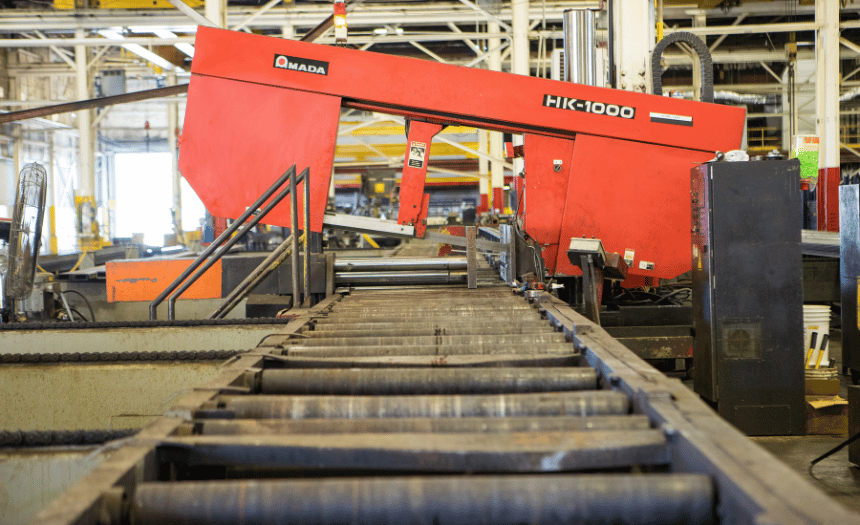
2205 stainless steel, known for its outstanding corrosion resistance and superior strength, is common in the shipbuilding industry. Kloeckner Metals supplies it and other 2205 structurals and long products across the Southeast United States, as well as the Bahamas and Dominican Republic.

2205 stainless steel is a duplex stainless steel grade that is highly regarded for its excellent combination of mechanical strength and corrosion resistance. It is commonly used in applications where high strength and good resistance to stress corrosion cracking, pitting, and crevice corrosion are required.
2205 stainless steel plate is a versatile material combining high strength, excellent corrosion resistance, and good weldability. Its unique properties make it suitable for a wide range of demanding applications across various industries, particularly where resistance to aggressive environments and high mechanical performance are required.
2205 stainless steel plate is used in a variety of industries including chemical processing, oil and gas, marine, pulp and paper, and food and beverage.
Applications include:
2205 stainless steel plate is considered to have moderate machinability compared to other stainless steels. Its machinability is more challenging than standard austenitic stainless steels like 304 or 316 due to its higher strength, hardness, and the presence of a duplex microstructure (a mix of austenite and ferrite phases). However, with the correct tooling, techniques, and parameters, 2205 stainless steel can be effectively machined.
While 2205 is weldable, care must be taken to maintain its balanced microstructure. Excessive heat input can lead to the formation of detrimental phases like sigma phase, which can impair corrosion resistance and toughness.
2205 stainless steel plate is a versatile material combining high strength, excellent corrosion resistance, and good weldability. Its unique properties make it suitable for a wide range of demanding applications across various industries, particularly where resistance to aggressive environments and high mechanical performance are required.
2205 stainless steel plate is used in a variety of industries including chemical processing, oil and gas, marine, pulp and paper, and food and beverage.
Applications include:
2205 stainless steel plate is considered to have moderate machinability compared to other stainless steels. Its machinability is more challenging than standard austenitic stainless steels like 304 or 316 due to its higher strength, hardness, and the presence of a duplex microstructure (a mix of austenite and ferrite phases). However, with the correct tooling, techniques, and parameters, 2205 stainless steel can be effectively machined.
While 2205 is weldable, care must be taken to maintain its balanced microstructure. Excessive heat input can lead to the formation of detrimental phases like sigma phase, which can impair corrosion resistance and toughness.
In general, 2205 stainless steel is considered superior to 316 stainless steel in terms of strength and resistance to corrosion, especially in aggressive environments like those found in chemical processing, offshore, and marine industries. However, 316 is more versatile, easier to work with, and more cost-effective, making it a better choice for less demanding applications or environments. The choice between 2205 and 316 ultimately depends on the specific requirements of the application.
2205 stainless steel is a duplex stainless steel, meaning it has a mixed microstructure of approximately 50% austenite and 50% ferrite. This dual-phase structure provides a unique combination of properties that offer superior mechanical strength and corrosion resistance compared to conventional austenitic stainless steels like 304 and 316. The grade is also known as UNS S32205 and UNS S31803 (a similar composition with slightly lower nitrogen content), and it is widely used in various industries due to its excellent performance in aggressive environments.
The main differences between lie in their chemical composition, mechanical properties, corrosion resistance, and typical applications. These distinctions arise due 304 stainless steel and 2205 duplex stainless steel to their differing metallurgical structures and the amounts of key alloying elements like chromium, nickel, and molybdenum.
In summary, 2205 duplex stainless steel outperforms 304 stainless steel in terms of strength and corrosion resistance, especially in harsh environments like those with chlorides, acidic chemicals, or high mechanical stresses. However, 304 is easier to work with, more affordable, and suitable for a wide range of general-purpose applications. The choice between these two materials should be based on the specific requirements of the application, including environmental conditions, mechanical loading, and cost considerations.
The equivalent grades of 2205 stainless steel can vary depending on the international standards and classifications used in different regions or industries. Since 2205 is a duplex stainless steel with a specific composition, it has a few equivalents that have similar properties in terms of strength, corrosion resistance, and composition.
| Standard | Designation | Description |
|---|---|---|
| UNS | S32205 / S31803 | US standard for 2205 duplex stainless steel |
| EN | 1.4462 | European standard designation |
| DIN (Germany) | WNr. 1.4462 | German standard designation |
| AFNOR (France) | Z3CN22-05AZ | French standard designation |
| JIS (Japan) | SUS329J3L | Japanese standard designation |
| BS (United Kingdom) | 318S13 | British standard designation |
| ASTM | A240, A789, A790 | ASTM standards for plate, pipe, and tubing |
| ISO | 31803 | International standard |
Yes, 2205 duplex stainless steel can be welded to 316 austenitic stainless steel, but it requires careful consideration of welding procedures and filler material to ensure the weld integrity and desired mechanical properties. The differences in composition, thermal expansion, and microstructure between 2205 and 316 can lead to potential issues like distortion, intermetallic phase formation, and cracking if not properly managed.
In general, 2205 stainless steel is considered superior to 316 stainless steel in terms of strength and resistance to corrosion, especially in aggressive environments like those found in chemical processing, offshore, and marine industries. However, 316 is more versatile, easier to work with, and more cost-effective, making it a better choice for less demanding applications or environments. The choice between 2205 and 316 ultimately depends on the specific requirements of the application.
2205 stainless steel is a duplex stainless steel, meaning it has a mixed microstructure of approximately 50% austenite and 50% ferrite. This dual-phase structure provides a unique combination of properties that offer superior mechanical strength and corrosion resistance compared to conventional austenitic stainless steels like 304 and 316. The grade is also known as UNS S32205 and UNS S31803 (a similar composition with slightly lower nitrogen content), and it is widely used in various industries due to its excellent performance in aggressive environments.
The main differences between lie in their chemical composition, mechanical properties, corrosion resistance, and typical applications. These distinctions arise due 304 stainless steel and 2205 duplex stainless steel to their differing metallurgical structures and the amounts of key alloying elements like chromium, nickel, and molybdenum.
In summary, 2205 duplex stainless steel outperforms 304 stainless steel in terms of strength and corrosion resistance, especially in harsh environments like those with chlorides, acidic chemicals, or high mechanical stresses. However, 304 is easier to work with, more affordable, and suitable for a wide range of general-purpose applications. The choice between these two materials should be based on the specific requirements of the application, including environmental conditions, mechanical loading, and cost considerations.
The equivalent grades of 2205 stainless steel can vary depending on the international standards and classifications used in different regions or industries. Since 2205 is a duplex stainless steel with a specific composition, it has a few equivalents that have similar properties in terms of strength, corrosion resistance, and composition.
| Standard | Designation | Description |
|---|---|---|
| UNS | S32205 / S31803 | US standard for 2205 duplex stainless steel |
| EN | 1.4462 | European standard designation |
| DIN (Germany) | WNr. 1.4462 | German standard designation |
| AFNOR (France) | Z3CN22-05AZ | French standard designation |
| JIS (Japan) | SUS329J3L | Japanese standard designation |
| BS (United Kingdom) | 318S13 | British standard designation |
| ASTM | A240, A789, A790 | ASTM standards for plate, pipe, and tubing |
| ISO | 31803 | International standard |
Yes, 2205 duplex stainless steel can be welded to 316 austenitic stainless steel, but it requires careful consideration of welding procedures and filler material to ensure the weld integrity and desired mechanical properties. The differences in composition, thermal expansion, and microstructure between 2205 and 316 can lead to potential issues like distortion, intermetallic phase formation, and cracking if not properly managed.
316 stainless steel properties encompass a blend of exceptional features and a broad range...
The welding of stainless steel is substantially different from welding other materials. The difference...
Stainless steel finishes offer a range of benefits. You can think about finishing as...
Unlike iron or carbon steel, stainless steel does not rust. On paper, it is...
We are pleased to share our steel and aluminum metals reference guides that share...
This blog post was last updated on 9/26/2024. Since stainless steel is aesthetically pleasing...

X
The Kloeckner Metals website uses modern technologies. Unfortunately, your browser doesn't support those technologies.
Download the latest version of one of these browsers to experience the site: