
Steel is one of the most widely used materials available. It’s crucial for modern infrastructure, appearing in skyscrapers, stadiums, bridges, and HVAC systems. Yet, as durable as steel is, it’s still vulnerable to corrosion. Left unprotected, steel exposed to oxygen and moisture will oxidize, weakening its structure and shortening its lifespan.
That’s why galvanizing steel has become a critical process in the metals industry. By applying a protective zinc coating, galvanizing shields steel from rust and extends its service life, even in demanding environments. Understanding how galvanizing works helps manufacturers decide if it’s the right fit for their project.
Kloeckner Metals is a full-line steel supplier and service center. Click to download our carbon flat roll reference guide and check what Kloeckner Metals routinely stocks.

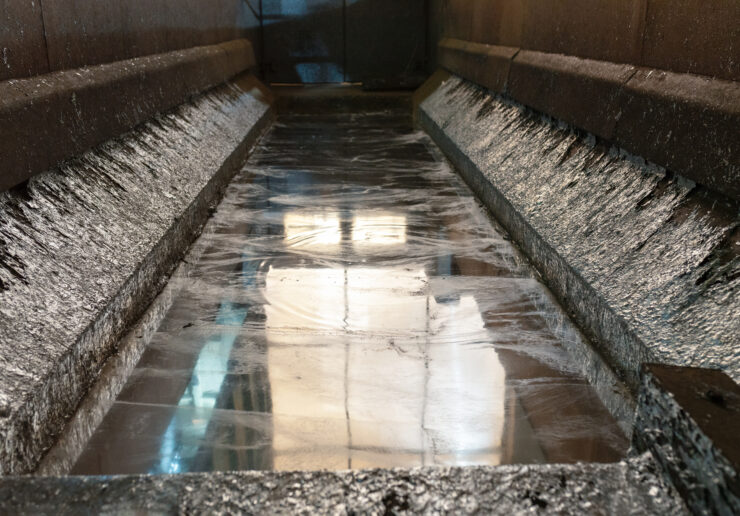
The most widely used method is hot-dip galvanizing, which involves immersing steel in a bath of molten zinc. Before the dip, the steel is thoroughly cleaned and prepared to ensure proper adhesion. Once submerged, the zinc reacts with the surface to form a strong, layered bond that becomes part of the steel itself, and not just a coating.
The process typically involves three key steps:
The hot-dip galvanizing process gives steel a unique toughness. Unlike paint or powder coatings, galvanizing chemically fuses with the steel, and doesn’t just cover it.
Steel is galvanized primarily to guard against rust. The zinc layer acts as both a barrier coating and a shield. Even if the surface is scratched, the zinc will corrode first, protecting the steel underneath.
This protection is why galvanized steel performs so well in outdoor and industrial applications. Think of a utility pole exposed to rain, wind, and pollution for decades, or the undercarriage of a vehicle that regularly encounters road salt. Without galvanizing, these structures would degrade quickly. With galvanizing, they remain safe and functional for much longer.
Galvanized steel offers a combination of benefits that make it attractive across industries:
This combination of protection, longevity, and cost-efficiency explains why galvanizing remains one of the most trusted finishing methods worldwide.

Because of its unique balance of strength and corrosion resistance, galvanized metal is found everywhere. Some of the most common applications include:
If durability is required, there’s a good chance galvanizing is involved.
The lifespan of galvanized steel depends on zinc thickness, environment, and exposure to corrosive elements.
In rural environments, galvanized steel may last several decades with minimal maintenance. In urban environments with moderate pollution, it often provides reliable performance for 40–50 years. Harsher coastal or industrial settings tend to see 20-25-year service lives.
Kloeckner offers galvanized steel in multiple coating options, including G115, G65, G235, and G90, so customers can choose the right level of protection for their needs. Heavier coatings are ideal for marine or industrial environments, while lighter coatings perform well in less corrosive settings.
Steel is one of the strongest and most important building materials, but corrosion can undermine that strength if it isn’t protected. Galvanizing steel through hot dip processes gives it the durability, longevity, and versatility that industries depend on.
At Kloeckner Metals, galvanized steel isn’t just another product line, but a core offering. Through a nationwide network of distribution centers, Kloeckner supplies galvanized sheet and galvanized sheet metal in a range of grades, sizes, and coating options.
We also offer hot-dip galvanizing services, enabling customers to protect custom-fabricated parts and structures with the same proven zinc coating. Our combination of in-stock flat roll products and value-added services ensures that manufacturers, contractors, and other customers get the right solution delivered quickly and efficiently.
Kloeckner Metals is a full-line steel supplier and service center. We combine a national footprint with the latest fabrication and processing technologies and the most innovative customer service solutions.

Tube laser cutting is a manufacturing process used to cut...
While some careers start with a clear plan, others take...
Düsseldorf (Germany), June 3, 2026, 1:18 pm CEST – Worthington...

X
The Kloeckner Metals website uses modern technologies. Unfortunately, your browser doesn't support those technologies.
Download the latest version of one of these browsers to experience the site:


