When choosing a finish for fabricated metal parts, paint vs. powder coating is a common comparison. Both processes can protect metal surfaces and provide an attractive finished appearance, but differences in application, durability, finish options, part requirements and production needs can make one a better fit for a particular application.
Understanding paint versus powder coat can help manufacturers determine which finishing process makes the most sense for their parts and operating environment.
The biggest difference between paint and powder coating is how the coating is applied and cured.
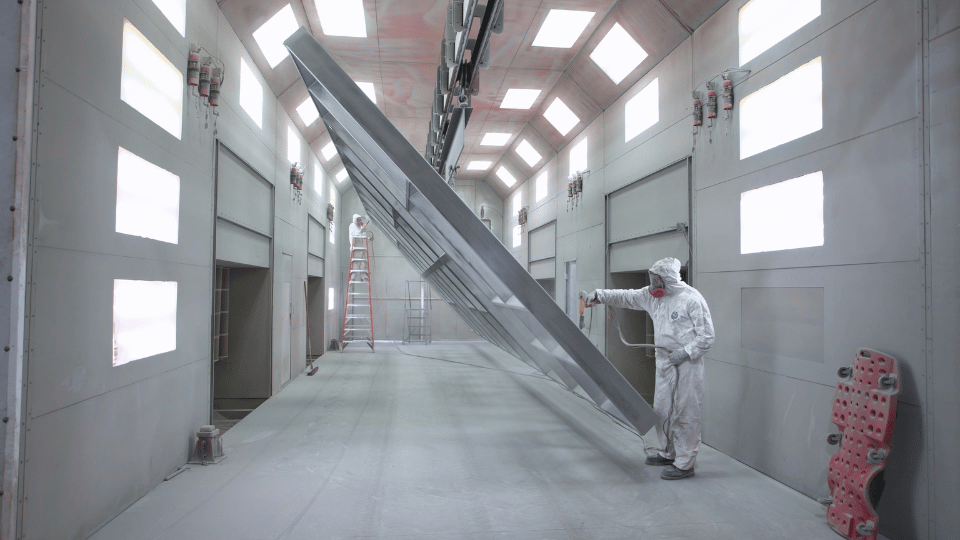
Powder coating uses a dry, finely ground coating material that is typically electrostatically applied to a conductive metal surface. The coated part is then heated so the powder melts, flows and cures into a continuous finish.
Wet paint, sometimes referred to as liquid coating, is applied in liquid form and then dries or cures to create the finished coating. A variety of paint formulations and application methods are available depending on the substrate, environment and performance requirements.
| Powder Coating | Wet Paint | |
| Coating material | Dry powder | Liquid coating |
| Application | Typically electrostatic spray | Spray or other liquid application |
| Finishing | Requires curing | Dries or cures depending on coating |
| Finish | Consistent, durable coating | Broad range of coating and finish options |
| Part considerations | Part must tolerate curing conditions | Can accommodate applications where oven curing isn’t appropriate |
| Common use | Production metal parts and assemblies | Metal parts, equipment and assemblies with varied requirements |
Neither process is universally better. The right choice depends on the part and what the finished product needs to do.
Although both processes apply a protective or decorative finish to metal, their production processes differ.
A typical powder coating process includes:
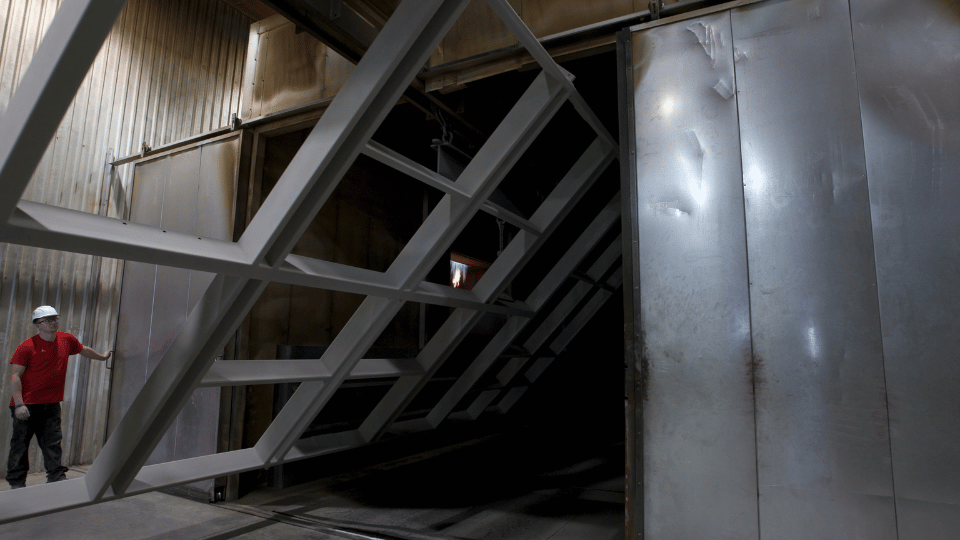
Wet painting generally follows a different sequence:
For either method, surface preparation is critical. A high-performance coating cannot compensate for improperly prepared metal. Depending on the application, mechanical preparation processes such as shot blasting may be used before coating.
For many fabricated metal parts, powder coating offers several advantages.
A properly specified and applied powder coating can provide strong resistance to impacts, abrasion and chipping. This makes it useful for components that may experience handling, transportation or regular use.
The electrostatic application and curing process can produce a uniform finish across production parts.
Powder coating can be well suited to repeat production runs of fabricated components. Depending on the equipment and coating system, unused powder may also be recoverable during application.
Powder coatings are available in numerous colors, gloss levels and textures, giving manufacturers options beyond basic surface protection.
Powder coatings are applied without the solvents used in many liquid paint systems, resulting in little to no volatile organic compound (VOC) emissions during application. This can help manufacturers reduce VOC emissions in the workplace and lessen the environmental impact associated with the coating process.
Those advantages don’t mean powder coating is automatically the best choice for every component. Part size, material, geometry and end-use environment all need to be considered.
Powder coating is often selected when durability and resistance to wear are priorities, but comparing paint versus powder coat isn’t as simple as declaring one inherently more durable.
Performance depends on factors such as:
A powder coating designed for indoor equipment, for example, shouldn’t automatically be expected to outperform a liquid coating engineered specifically for a demanding outdoor environment.
Instead, manufacturers should match the entire coating system to the conditions the component will encounter.
Both powder coating and industrial paint can help protect metal against corrosion by creating a barrier between the substrate and its environment.
But corrosion resistance depends on much more than whether the coating started as a powder or a liquid.
Important factors include:
Edges, welds, corners and difficult geometries can also affect coating performance.
For applications where corrosion resistance is especially important, coating specifications should account for the component’s actual service environment rather than selecting a process based solely on general comparisons of powder coating vs. paint.
Both processes can create attractive finished metal components, but they offer somewhat different possibilities.
Powder coating can offer:
Wet painting can offer:
Appearance requirements therefore need to be considered alongside performance requirements.
Much of the paint vs. powder coating discussion focuses on powder coating’s benefits, but there are applications where wet paint may make more sense.
Wet painting may be considered when:
This is one reason having access to both industrial powder coating and industrial painting services can be useful. The finishing process can be selected around the part rather than forcing every component into the same coating method.
The physical characteristics of a fabricated part can have a major impact on coating selection.
Powder-coated components must fit within the applicable coating and curing equipment. Very large assemblies may therefore require different finishing equipment or a liquid coating process.
Complex shapes, recessed areas and difficult-to-reach surfaces can affect how a coating is applied and how consistently it covers the component.
Because powder coatings typically require elevated curing temperatures, manufacturers should consider how the complete component will respond to the curing process.
Welds, overlapping surfaces, enclosed areas and mixed-material assemblies can introduce additional finishing considerations.
For this reason, finishing is worth considering during part and manufacturing planning, rather than waiting until fabrication is complete.
There isn’t a universal answer to whether paint or powder coating costs more.
The cost of either process can depend on:• Part dimensions and weight
For production quantities, the efficiency of the overall manufacturing process also matters.
Manufacturers comparing paint versus powder coat should therefore consider total finishing requirements and production costs, rather than simply comparing the price of the coating materials themselves.
Choosing between powder coating and wet paint starts with the requirements of the finished component.
| Consider | Questions to Ask |
| Part material | Is the substrate suitable for the coating and application process? |
| Part size | Will the component fit the required coating and curing equipment? |
| Geometry | Are there recessed areas, welds or complex surfaces to coat? |
| Environment | Will the part face moisture, UV, chemicals, abrasion or impact? |
| Appearance | Are there specific color, texture or gloss requirements? |
| Performance | What level of wear and corrosion resistance is required? |
| Production volume | Is this a one-off component or a repeat production part? |
| Specification | Does the customer or end application require a particular coating system? |
For many applications, there isn’t a blanket winner in the paint vs. powder coating comparison. Powder coating can be an excellent option for durable, consistent finishes on production metal components, while wet painting provides flexibility for parts and coating requirements that aren’t as well suited to powder.
The best approach is to evaluate the substrate, component design, service environment and finish requirements together.


Cobot welding combines a collaborative robot with welding equipment and...
Tube laser cutting is a manufacturing process used to cut...
While some careers start with a clear plan, others take...

X
The Kloeckner Metals website uses modern technologies. Unfortunately, your browser doesn't support those technologies.
Download the latest version of one of these browsers to experience the site:


